Navigating Bonus Timelines and Live Odds Adjustments in Overlapping Tennis Sessions with Equine Events
Geschrieben von Bianca Schmid · 12.11.2026
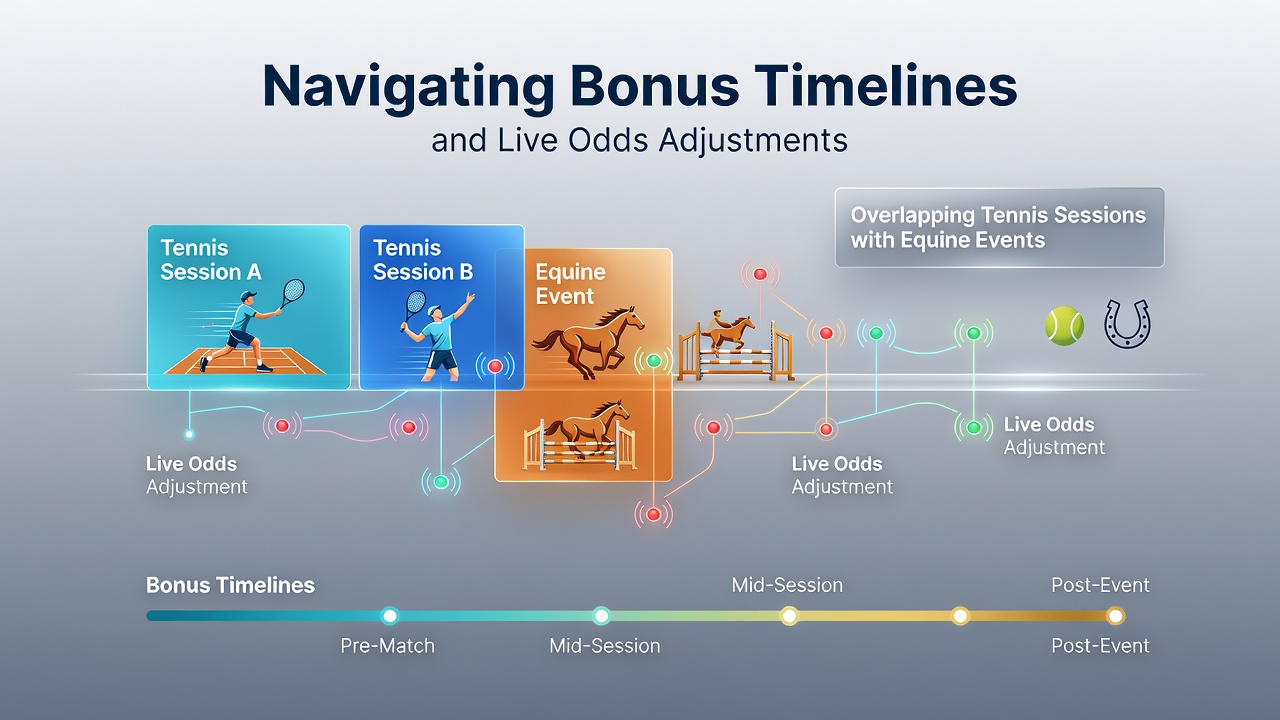
Navigating Bonus Timelines and Live Odds Adjustments in Overlapping Tennis Sessions with Equine Events
Overlapping tennis sessions and equine events create distinct challenges for tracking bonus timelines alongside live odds adjustments, particularly when multiple matches and races run concurrently across different time zones. Platforms must synchronize promotional windows with rapid market shifts that occur during these periods, and data from industry reports shows how these intersections affect wager processing sequences. Observers note that bonus expiration clocks often align with set changes in tennis while equine post times introduce separate volatility layers that require coordinated monitoring.
Core Elements of Overlapping Sessions
Tennis matches frequently extend through multiple sets with variable durations, whereas equine events follow fixed post times that dictate brief windows for live wagers. When these schedules intersect, bonus timelines tied to deposit windows or rollover requirements demand precise alignment to avoid expiration before odds finalize. Research indicates that simultaneous events in November 2026, including several ATP tournaments and major racing circuits, will increase the frequency of such overlaps due to compressed calendars. Those who monitor these patterns find that adjustments in one market can trigger recalibrations in the other within seconds of key outcomes like aces or photo finishes.
Bonus Timeline Mechanics During Concurrent Events
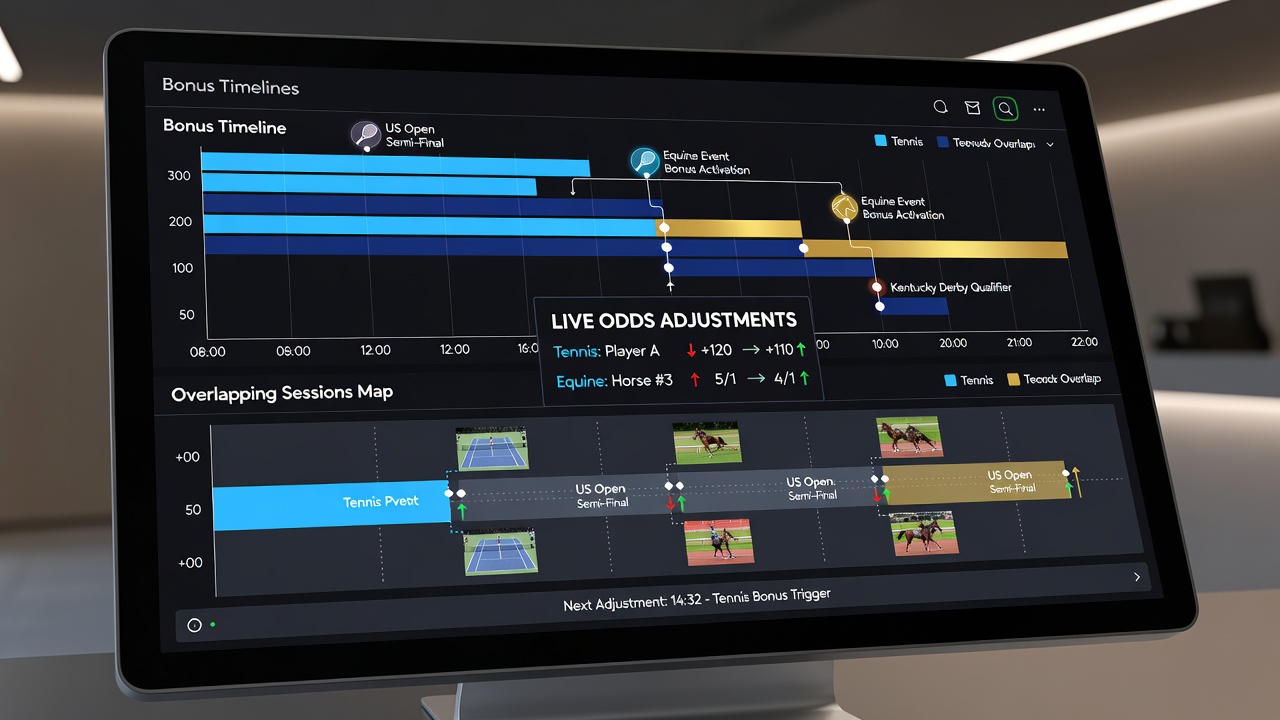
Bonus structures typically operate on fixed activation and expiration periods measured in hours or days, yet live environments compress these intervals when tennis sets conclude at the same moment equine fields approach the finish line. According to figures from the European Gaming and Betting Association, cross-sport platforms record elevated adjustment rates during such overlaps because operators recalibrate promotional eligibility based on real-time participation metrics. And operators often extend certain bonus windows slightly when equine events run behind schedule, but tennis momentum shifts rarely allow similar flexibility since point-by-point updates arrive continuously. This creates a sequence where users must verify remaining bonus time against both the current set score and the next equine race declaration.
Live Odds Adjustments in Real Time
Odds engines update tennis markets after every point and game while equine odds fluctuate with each new betting pool or track condition report. When sessions overlap, an adjustment in one discipline can cascade into the other through shared platform liquidity pools. Data shows that in November 2026 schedules, several tennis sessions in Asia-Pacific regions will run parallel to European equine meetings, prompting operators to apply unified risk models that account for both. Those monitoring these flows observe that a sudden tennis tiebreak can coincide with an equine odds tightening, forcing simultaneous recalibrations that test system latency. Platforms integrate these changes through automated protocols that reference historical overlap data to maintain market stability.
What's interesting is how regulatory frameworks in different regions shape these adjustments. The Nevada Gaming Control Board requires documented protocols for simultaneous market handling, whereas Australian research institutions have published studies on timing correlations between racket sports and thoroughbred racing. These sources highlight that operators maintain separate audit trails for bonus applications versus odds modifications to ensure compliance across jurisdictions.
Practical Navigation Approaches
Users and operators navigate these overlaps by layering timeline trackers that display both bonus countdowns and event-specific clocks in a single interface. When a tennis session extends into extra games while an equine race approaches its start, the system prioritizes confirmation of bonus status before finalizing any live stake. Evidence suggests that platforms handling November 2026 overlaps will employ predictive algorithms trained on prior concurrent schedules to forecast adjustment windows. Observers note that equine events with weather-related delays introduce additional variables that tennis schedules rarely accommodate, requiring flexible bonus extensions documented in advance. This coordination reduces mismatches between promotional periods and market availability.
Regional Scheduling Factors in November 2026
November 2026 calendars place several tennis tournaments alongside established equine circuits in overlapping time blocks, particularly across European and Australian venues. These alignments amplify the need for synchronized bonus tracking because promotional cycles tied to seasonal campaigns often conclude mid-month. According to industry reports, operators prepare by pre-mapping potential intersection points and testing odds adjustment speeds under simulated dual-event loads. The result is a framework where bonus timelines remain visible even as live odds shift across both tennis and equine markets without interruption.
Conclusion
Overlapping tennis sessions and equine events require coordinated management of bonus timelines and live odds adjustments to maintain consistent platform operation. Data from regulatory and research bodies demonstrates that structured monitoring protocols support accurate tracking through these periods, especially during the November 2026 schedule. Operators continue to refine these systems through documented adjustments that address concurrent market demands across disciplines.