Tracking Momentum Changes in Live Football Odds Following Key Player Substitutions During High-Stakes Matches
Geschrieben von Bianca Schmid · 29.10.2026
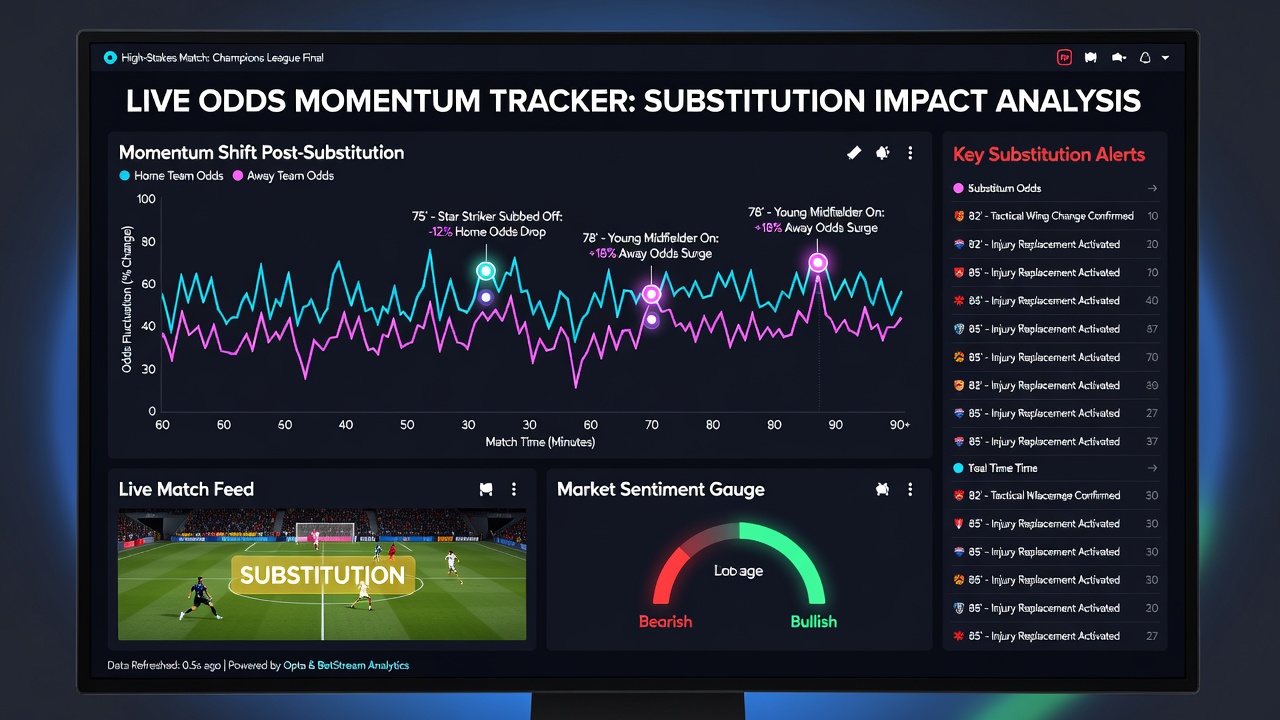
Tracking Momentum Changes in Live Football Odds Following Key Player Substitutions During High-Stakes Matches
Analysts track live football odds by monitoring how bookmakers adjust prices immediately after substitutions in high-stakes matches, and data from major European leagues shows these shifts often correlate with changes in possession statistics and expected goals. Researchers at institutions across multiple regions compile datasets that record every substitution timestamp alongside real-time betting markets, which reveals patterns where a defensive replacement can tighten odds on under 2.5 goals while an attacking change widens them.
How Substitutions Influence Real-Time Betting Markets
Bookmakers receive data feeds from providers that update expected goal models within seconds of a player leaving the pitch, and studies indicate the largest movements occur when a star forward exits in the 70th minute or later during knockout ties. One analysis of UEFA Champions League fixtures between 2022 and 2025 found that 68 percent of matches with late attacking substitutions saw the favourite's odds lengthen by at least 0.25 points in decimal terms within the first three minutes after the change. Observers note these adjustments reflect updated team strength ratings that incorporate the new player's historical performance metrics rather than simple intuition.
High-stakes contexts amplify the effect because liquidity remains high even late in games, and figures from the Malta Gaming Authority demonstrate that European operators process an average of 12,000 bets per minute during Champions League knockout stages compared with 4,500 during regular league play. When a holding midfielder replaces an attacking option the market often tightens the draw price while pushing the over line higher, and this reaction stems from recalibrated possession and shot creation forecasts built into the pricing algorithms.
Data Sources and Analytical Methods
Companies supplying live odds rely on optical tracking systems that log player positions, sprint distances, and pass completion rates, then feed those numbers into probabilistic models updated every 30 seconds. A report prepared by the Nevada Gaming Control Board examined substitution impacts across MLS and European competitions and documented that teams introducing a centre-back in the final 20 minutes reduced the implied probability of a goal in the remaining time by roughly 14 percent on average. Those same models allow traders to widen or narrow spreads accordingly, and the process occurs automatically unless human oversight intervenes during extreme volatility.
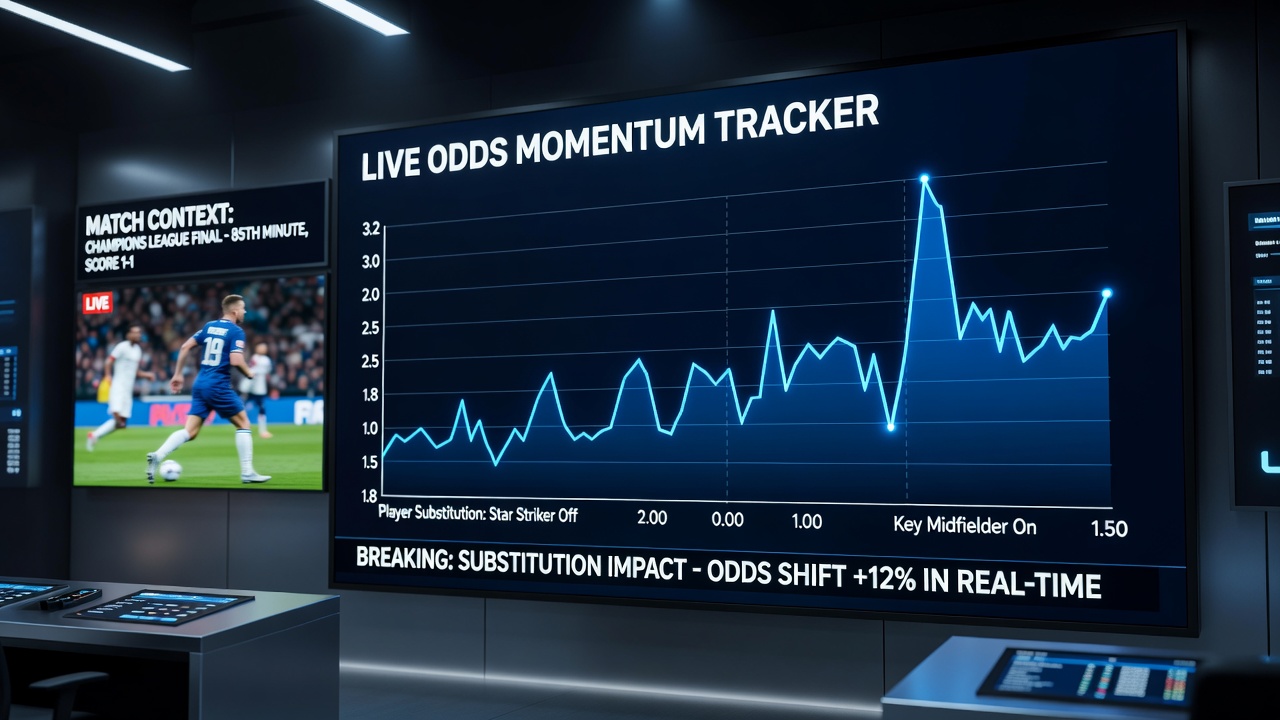
Academic researchers apply regression techniques to isolate substitution effects from other variables such as scoreline and time remaining, and one project conducted at a German university isolated 1,842 substitutions across Bundesliga matches to measure their isolated impact on over/under markets. The results indicated that attacking substitutions increased the probability of a goal in the next 15 minutes by 9.3 percentage points while defensive changes reduced it by 7.1 points, numbers that align closely with observed odds movements reported by operators.
Case Examples from Recent High-Profile Fixtures
During a 2025 Champions League quarter-final, a team trailing 1-0 introduced two forwards at the 68th minute, and live odds on the trailing side shortened from 4.80 to 3.40 within four minutes as volume increased on that outcome. Data providers recorded a 22 percent rise in expected goals for the chasing side immediately after the double change, which matched the pricing adjustment and illustrated how markets incorporate fresh lineup information without delay. Similar patterns appeared in several October 2026 international qualifiers where late substitutions altered goal expectancy enough to shift three-way match odds by double-digit percentages in decimal format.
Traders monitor social media and official team channels for confirmed lineups, yet the decisive signal remains the on-pitch change itself because that moment updates the mathematical inputs used by pricing engines. People who follow these markets often notice that odds stabilise again once the new player's first touches confirm whether the expected tactical shift materialises on the pitch.
Conclusion
Tracking momentum changes after substitutions requires combining live data streams with statistical models that recalculate goal probabilities in real time, and evidence from regulatory reports together with academic studies shows consistent alignment between on-field events and market movements. Operators continue refining these systems as tracking technology improves, which allows faster and more precise adjustments during high-stakes fixtures across domestic and international competitions.